
Onboarding new employees in the salon often decides whether a new hire stays long-term. The first impression sticks, especially in a trade with close team contact and direct client interaction. An unstructured start, by contrast, costs time, nerves, and in the worst case the new colleague themselves.
This article covers what to clarify before the first day, which legal deadlines apply to the employment contract, and what a realistic onboarding plan looks like. It builds on the article Recruiting for Hair Salons, since good recruiting quickly falls flat without a clean start.
Onboarding new employees in the salon: why the first impression matters

New employees usually decide within the first few weeks whether they feel at home in the team. A chaotic first day with no point of contact quickly reads as a warning sign. Salons that plan onboarding deliberately, by contrast, noticeably reduce the risk of an early resignation. The effort behind a structured start almost always pays off, even for small teams.
Before the first day: what a salon should prepare
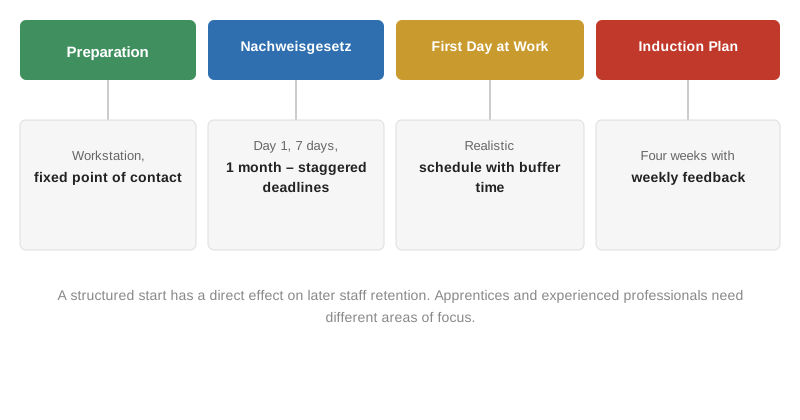
A dedicated workstation with tools, an apron and a name badge should be ready before the start date. Just as important is a fixed point of contact who sets aside time for questions on day one. The schedule for the first two weeks should also include realistic buffer time rather than a fully booked client calendar right away. Briefing the team in advance also prevents the new person from going unnoticed on their first day.
Legal notice requirements: which working conditions must be in writing, and when
Germany’s Nachweisgesetz (Employment Conditions Act) requires employers to record essential working conditions in writing. On the first day, this must already include the names of both parties, working hours, and the agreed pay. Within seven days, details on the start and duration of employment, any probationary period, a brief job description and the workplace must follow. Within one month, annual leave entitlement, notice periods and references to any applicable collective agreement must finally be in writing. Meeting these deadlines avoids fines and creates clarity from day one.
Registering with health insurance and the trade association
Every new employee must be registered for social insurance with the relevant health insurance provider. For the hairdressing trade, the Berufsgenossenschaft für Gesundheitsdienst und Wohlfahrtspflege (BGW) also provides the statutory accident insurance. Salons should therefore make sure early on that registration happens on time, so insurance cover is in place from the very first day in case of a workplace accident.
Onboarding new employees in the salon: a structured plan
An onboarding plan for the first four weeks gives both the new employee and the team a sense of direction. In the first week, product knowledge, hygiene standards and getting familiar with daily routines usually take priority. From the second week on, the new hire increasingly takes on their own client appointments, initially under supervision. A short weekly check-in also helps surface uncertainties early instead of letting them build up.
Trainees and experienced hires: differences in onboarding
Trainees need an introduction to the training plan and vocational school schedule on top of general onboarding. Their main point of contact is usually the training supervisor, not necessarily the salon owner. Experienced new hires, by contrast, need less technical introduction but clear information on salon-specific routines and product lines. Both groups, however, benefit equally from a fixed point of contact during the first few weeks.
Onboarding and employee retention: how the two connect
A successful start lays the groundwork for later employee retention, since first impressions tend to linger. The article Employee Retention in the Salon explains further how to sustain that positive feeling beyond the first few weeks. Thinking about both phases together avoids costly turnover right after hiring.
Common mistakes in onboarding new employees
A frequent mistake is a fully booked first day with no introduction time at all. Equally problematic is a missing point of contact, which quickly leaves new employees feeling abandoned. Late or incomplete contract paperwork also creates uncertainty and looks unprofessional. Ending the onboarding period abruptly after just a few days also risks avoidable mistakes in later client interactions.
Conclusion: onboarding new employees in the salon as an investment in the future
Onboarding new employees in the salon takes time, planning and some additional staffing effort up front. That investment usually pays off clearly through lower turnover and faster productivity. Salons that combine preparation, legal deadlines and a clear onboarding plan create the best conditions for a lasting fresh start.
This article provides general information and does not replace individual legal, tax or financial advice.