
Essential oils in the salon are far more than just a pleasant fragrance in care, styling and rituals. Yet a natural aroma involves much more than a pleasant scent. Essential oils originate from plant material, can be obtained from different parts of a plant and vary according to origin and extraction method.
For salon professionals, this basic knowledge can make it easier to explain terminology and answer client questions with greater confidence. The purpose is not to turn a salon consultation into aromatherapy. It is, rather, to understand what lies behind an essence and why origin, extraction and yield make a difference.
What are essential oils in the salon, exactly?
In simple terms, essential oils are volatile aromatic components of plants. “Volatile” means that their molecules can disperse into the air – which is why we are able to smell them. They can come from different parts of a plant and, depending on the material, are commonly obtained by expression or distillation.
This already shows that an essential oil is more than “a fragrance”. Its composition is, in turn, connected to the plant, the plant part used and the method of extraction.
One plant can provide several different essences
The bitter orange tree is a particularly clear example. Different aromatic essences can be obtained from the same plant species:
- from the blossom: neroli oil,
- from the rind: bitter orange oil,
- from the leaf: petitgrain oil.
The important point for consultation is that the name of a plant does not tell the whole story. The plant part being used also, in each case, influences which essence is produced.
Essential oils in the salon: how are they obtained?
Different methods are suitable for different types of plant material. Three processes illustrate the main differences. A more in-depth overview of the common extraction methods is also provided by the German Wikipedia article on essential oils.
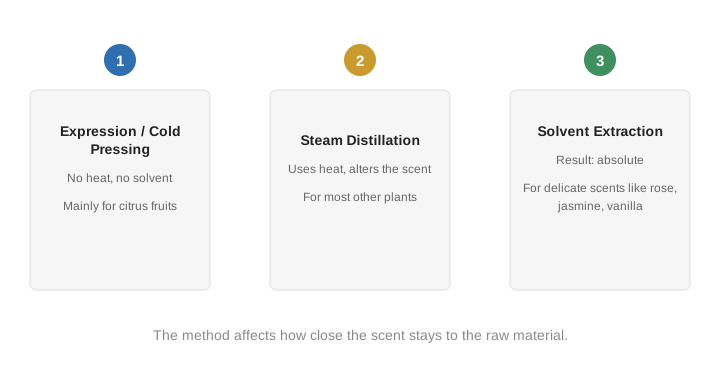
1. Essential oils in the salon: expression or cold pressing
With expression, oil is mechanically pressed from the plant material. The process uses no heat and no solvents. It is particularly suited to citrus fruits. Their essential oils occur in relatively accessible oil sacs close to the surface of the rind.
From an aroma perspective, this method is notable because the raw material is changed comparatively little.
2. Steam distillation
During steam distillation, steam passes through the plant material. Volatile aromatic components are thereby carried out of the material with the steam. The mixture is then cooled until it condenses back into liquid. Because oil and water do not remain mixed, the essential oil can be separated.
The process uses heat and can change the aroma more strongly in comparison with the original plant material than simple expression.
3. Essential oils in the salon: solvent extraction and absolutes
Not every aromatic plant is processed by expression or steam distillation. Solvent extraction can therefore be used for delicate or difficult-to-extract aromatic materials. Aromatic components are first dissolved together with other plant material. Further steps filter out unwanted components such as waxes and remove the solvent or alcohol.
The resulting material is known as an absolute. The training material used as the basis for this article identifies rose, jasmine and vanilla as examples of absolutes.
Natural often means complex
Natural plant essences can contain a large number of different chemical components. Rosemary is a good example of how complex the natural composition can be. The plant contains many different aromatic and other naturally occurring compounds.
A synthetically constructed fragrance blend can, by contrast, be deliberately built from far fewer individual components. This should not be turned into a simple judgement that “natural is good and synthetic is bad”. The more useful lesson for salon professionals is that natural aroma profiles can be highly complex. They cannot, therefore, necessarily be reduced to a single fragrance component.
Why does the raw material not always smell exactly like the finished essence?
The extraction method influences how closely an essence resembles the original aroma of the plant. Mechanical expression changes the raw material comparatively little. Steam distillation, on the other hand, uses heat and can alter the aromatic profile more noticeably.
This is one reason why two essences from the same or a similar plant can have different aromatic characteristics. That holds true even though both originate from botanical material.
Why are essential oils in the salon sometimes so expensive?
An important price factor is yield: how much plant material is required to obtain a certain amount of oil?
Rose oil has a particularly low yield. The training material gives an approximate ratio of 1,000 units of rose petals for one unit of oil. Lavender requires considerably less plant material for the same amount of oil. That difference has a direct effect on raw-material cost.
The cultivation method and the amount of labour involved can also influence price. Plants grown with more labour-intensive farming methods therefore create higher production costs.
What does this knowledge mean for salon consultation?
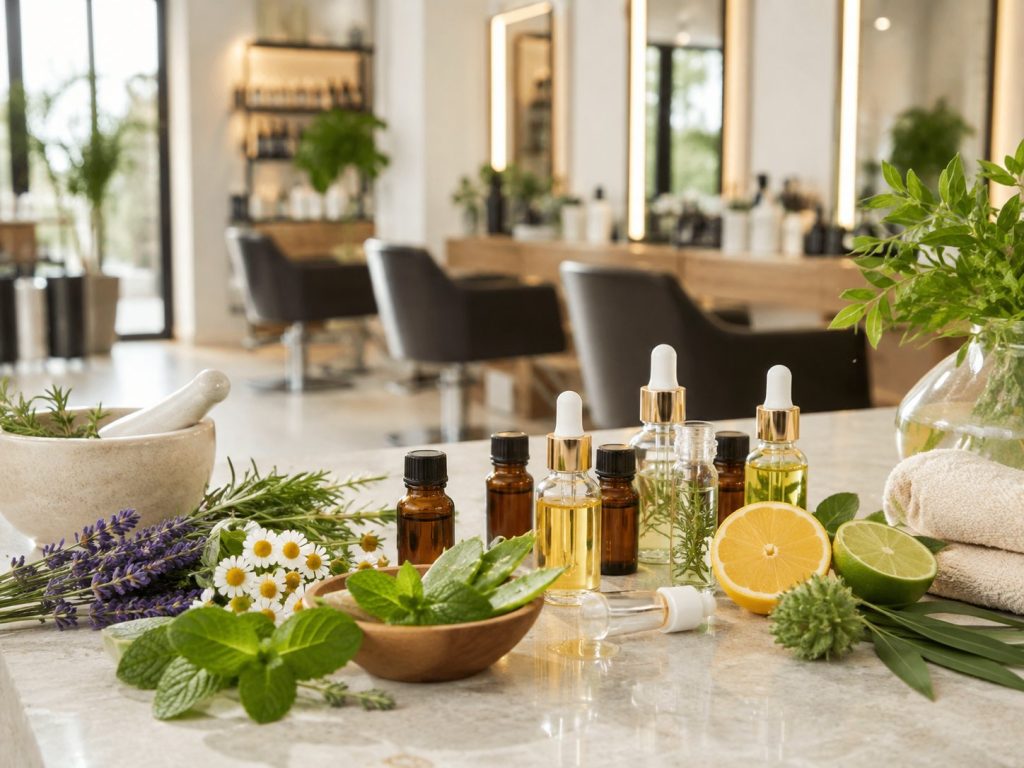
Salon professionals do not need to become chemists or perfumers. A few clearly understood principles can nevertheless make client conversations more informed.
Instead of stopping at “This smells like orange” or “This contains rosemary”, a useful consultation can, when relevant, go one step further:
- Which part of the plant does the essence come from?
- How was it extracted?
- Why might its aroma differ from the fresh plant material?
- Why are some natural essences considerably more expensive than others?
This kind of knowledge provides understandable context. It does not replace personal fragrance preference and should not overwhelm clients with technical language. The value comes from translating specialist knowledge into a simple explanation that is relevant to the client’s question. The article Salon Consultation shows how to systematically uncover a client’s needs and priorities as part of that conversation.
Knowledge becomes valuable through good communication
The same principle therefore applies here as in many other areas of salon consultation. The quality of the conversation is not determined by how much technical knowledge is delivered. What matters instead is how well the relevant knowledge is used in response to the client’s needs.
Understanding how a plant essence is produced makes it easier to explain origin, extraction, complexity and price. A simple fragrance topic can then become an opportunity to demonstrate professional expertise – clearly, factually and without sales pressure.
This article provides general information and does not replace individual legal, tax or financial advice.