
Good salon consultation does not start at the retail shelf and it does not start with a standard recommendation. It starts by understanding what the client is experiencing today, what is bothering them and what result they want to achieve.
This is one of the differences between a purely technical service and a complete salon experience. The client understands not only what is being done, but also why a solution suits them. Just as important is how they can maintain or recreate the result at home.
Salon consultation is part of the service
A technically strong haircut or a successful colour result is the foundation. For many clients, additional value is created when they also receive guidance: Which care approach suits their hair? Which styling routine is realistic? What should they do differently at home? Which solution supports the result they actually want?
Consultation is therefore not an extra step that only takes place when something is being sold. It is part of professional service and can strengthen trust, satisfaction and long-term client loyalty.
1. Clarify the starting point and desired result
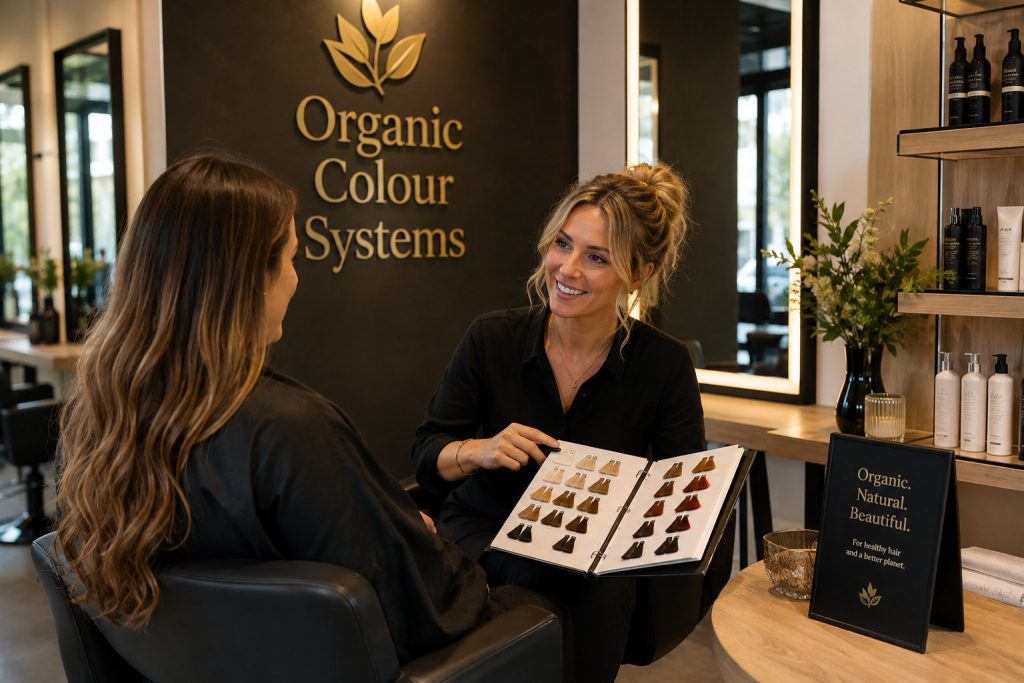
Before making a recommendation, the stylist should understand where the client is now and where they want to go. Four questions help structure the conversation:
- What is the current condition of the hair and the existing styling routine?
- What result does the client want to achieve?
- What matters most to the client?
- Which realistic options are available to reach that goal?
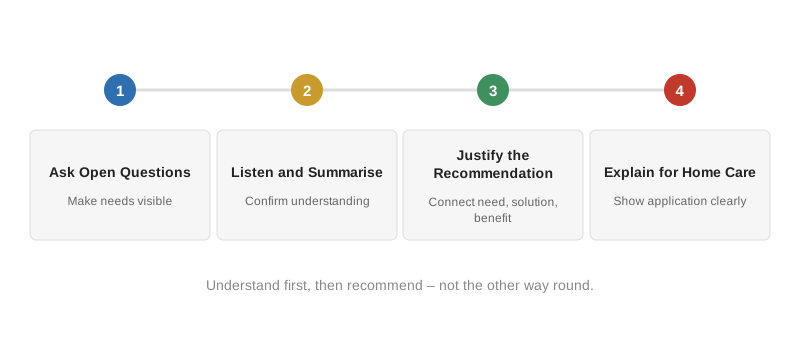
This sequence prevents the consultation from jumping to a solution too early. Understand first, then recommend.
2. Use open questions to uncover real needs
Good questions reveal more than a quick yes-or-no check. They give clients room to describe their priorities, habits and difficulties in their own words. For example:
- What bothers you most about your hair at the moment?
- How are you currently caring for your hair at home?
- How would you like your hair to look and feel after styling?
- How much time do you realistically want to spend on care and styling in the morning?
- What matters most to you when choosing a care or styling solution?
The final question can produce very different answers. Possible priorities include ease of use, hold, shine, moisture, volume, ingredients, fragrance, price or minimal effort. A recommendation becomes genuinely individual only when that priority is understood.
3. Listen, observe and summarise
Needs analysis is not only about asking questions. Professionals also observe hair condition, structure, existing styling and the way the client handles their hair. At the same time, technical observations should not be treated as automatic proof of what the client wants.
The article Hair Structure in the Salon explains how to assess porosity and pH value professionally as part of this.
A short summary before recommending a solution can help: “If I understood you correctly, you want more control but do not want to spend more than ten minutes styling in the morning.” This gives the client an opportunity to confirm or correct the understanding.
4. Explain recommendations with a simple solution formula
A recommendation is easier to understand when the connection between need, solution and benefit is stated clearly. A simple formula is:
“Because you said that …, I recommend … because … . This will help you achieve … .”
The recommendation itself can take many forms: an adjusted service, a care routine, a styling technique, a tool or a suitable product type. The important factor is not the number of recommendations, but their relevance to the need the client has already described. The article Cross-Selling in the Salon explains how such extra recommendations also make economic sense.
Rather than listing many options at once, it is usually more useful to set a clear priority and explain the reason for it.
5. Translate the salon result into an at-home routine
Many clients are happy with their result in the salon and only realise at home that one important step is missing. Consultation should therefore answer a practical question: How can the client support the result themselves?
This may include the right sequence of care and the amount to use. It can also include a simple styling technique, an appropriate heat setting or a realistic timing for the next salon service.
The clearer and more practical the instruction, the more likely the client is to use it successfully.
6. Salon consultation: distribute it throughout the visit
Consultation does not have to become a long sales conversation at the end of the appointment. Natural consultation opportunities appear throughout the visit:
- during the haircut and colour discussion,
- at the wash station, when hair condition and care are directly relevant,
- during useful waiting periods,
- during styling, when technique and application can be demonstrated,
- at the end of the appointment, when the most important steps can be summarised briefly.
This makes consultation a consistent thread through the service rather than an additional block that feels artificial.
7. Advise rather than pressure
The salon team’s responsibility is to provide appropriate professional advice and make a reasoned recommendation. The decision to accept that recommendation belongs to the client.
This distinction matters. Professional consultation creates clarity, while sales pressure can damage trust. A client can decline a recommendation or return to it later. They can also use only part of it without any reduction in the quality of service they receive.
Turning salon consultation into a team standard
Good consultation should not depend entirely on which team member happens to serve the client. Salon owners can define a small number of shared standards. A practical framework is:
- Always: ask about needs, summarise the goal, explain the reason for the recommendation and make the application easy to understand.
- Stop: listing too many solutions without being asked, overloading clients with technical language or forcing a purchasing decision.
- Continue: bringing individual expertise, personality and an honest professional assessment into the consultation.
Where appropriate, relevant client preferences can also be recorded within the salon’s existing client documentation. This allows the team to reconnect with previous goals, routines and experiences at the next visit. Consultation is already a formal part of the official training, as shown by the BIBB occupational profile for hairdressers, which explicitly names client consultation as a training requirement.
How salon owners can recognise good consultation
Consultation quality should not be measured only through retail sales. A broader view is more useful: Are client goals documented? Are there fewer misunderstandings about services? Can clients manage their styling routine more successfully at home? Are rebooking, recommendations or satisfaction improving?
Short team reviews can also be valuable. Which questions work well? Where does uncertainty arise? Which recommendations are frequently misunderstood? These observations can reveal training needs and opportunities to improve salon processes.
Conclusion: salon consultation – understand first, then recommend
Strong salon consultation follows a simple principle: understand the client and clarify the desired result. It is just as important to explain a suitable solution and make implementation easier. It combines professional expertise with genuine attention.
When this approach is applied consistently across the team, consultation stops feeling like an additional sales process and becomes a visible part of service quality. That can turn a good salon visit into an experience clients remember. It is what makes them want to return.
This article provides general information and does not replace individual legal, tax or financial advice.