
Location analysis for a hair salon often decides between success and failure at founding. A wrong location is hard and expensive to correct later. Checking the key factors systematically upfront lowers the entrepreneurial risk considerably.
This article sorts out the central location factors and shows how to weigh rent against realistic revenue expectations. It complements the article Financing Salon Equipment, which covers financing the initial setup.
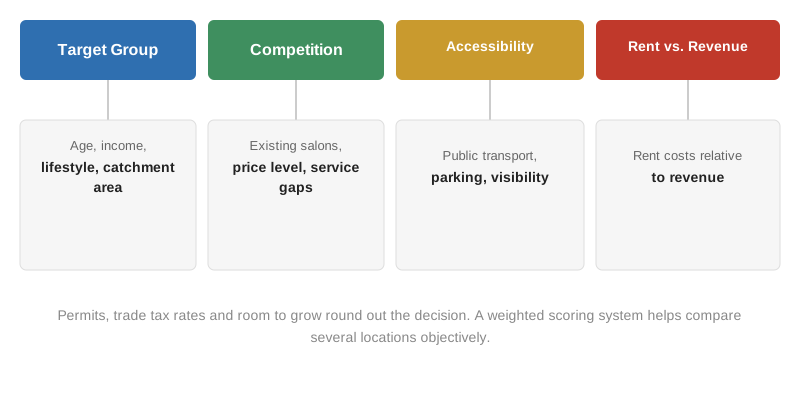
Location Analysis for a Hair Salon: The Key Criteria at a Glance
Four factors form the central pillars: target audience, competition, accessibility, and the relation of rent to revenue. Assessing these factors systematically rather than by gut feeling leads to a better-founded decision. The Frankfurt Chamber of Commerce recommends a weighted scoring model for this, comparing every location by the same criteria. That makes it possible to compare several options objectively instead of relying on a single impression.
Assessing Target Audience and Catchment Area Correctly

Age, income and lifestyle of the desired clientele determine which catchment area even qualifies. A location near fitness studios or upscale retail often attracts a similar clientele. Local purchasing power also plays a decisive role, especially for higher-priced services. Defining a clear target profile upfront helps identify suitable locations much faster.
Walk-In Traffic or a Neighbourhood Location: Two Different Concepts
A central location in a busy pedestrian zone brings plenty of walk-in traffic and spontaneous new clients. A quieter neighbourhood location, by contrast, scores with lower rent and a loyal local clientele. Barbershops often thrive on busy streets with an authentic atmosphere, while wellness-oriented salons tend to prefer quieter settings. Which concept fits depends strongly on the planned offering and target audience.
Competitor Analysis: How Much Competition Is Healthy?
A look at existing salons nearby reveals price levels, target groups and gaps in the offering. A certain degree of competition even points to existing demand. A clearly oversaturated market, by contrast, makes market entry considerably harder. Knowing the competition well helps position the own offering more precisely.
Accessibility, Parking and Visibility
Good access to public transport makes the journey to the appointment easier for many clients. Sufficient nearby parking also directly affects client satisfaction. A clearly visible shopfront also increases the chance of spontaneous walk-in clients. Checking these three points upfront avoids later complaints about poor accessibility.
Weighing Rent Against Realistic Revenue Expectations
Rent should stand in a healthy relation to realistically expected revenue. Choosing a cheaper, less central location at the start noticeably lowers the financial risk. A later move to a more expensive location becomes easier to finance once a client base is established. The article Grants for Hair Salons shows which subsidies can ease the start-up phase further.
Location Analysis for a Hair Salon: Permits and Municipal Location Factors
Before signing a lease, it pays to check with the local building authority about permitted use of the space. Some commercial spaces first need an official change of use for a hair salon. The local business tax rate also varies noticeably from municipality to municipality. These differences are worth comparing before the final location decision too.
Planning for Digital Infrastructure and Room to Grow
A stable internet connection is a basic requirement today for card payment and online booking. Without reliable Wi-Fi, unnecessary waiting times for clients quickly appear in daily operations. Extra space for later expansion avoids an early, costly second move. Thinking about this room to grow from the start leads to much more forward-looking planning.
Conclusion: Location Analysis for a Hair Salon as a Decision Basis
Location analysis for a hair salon means weighing several factors together rather than in isolation. Target audience, competition, accessibility, rent and permits only become convincing in combination. Comparing these criteria systematically lowers the risk of a costly wrong decision. That creates a solid basis for the entire location decision.
This article provides general information and does not replace individual legal, tax or financial advice.