
Supplier selection for hair salons ranks among the most important decisions during a business start-up. The choice ties up capital, shapes brand image, and affects prices and availability for years. Anyone who decides too quickly often regrets high minimum order quantities or disappointed exclusivity promises later.
This article sorts out the key questions: What does salon exclusivity actually mean, and how can it be verified? It also shows when sourcing from non-European manufacturers makes sense. It complements the article Financing Salon Equipment, which covers financing the initial setup.
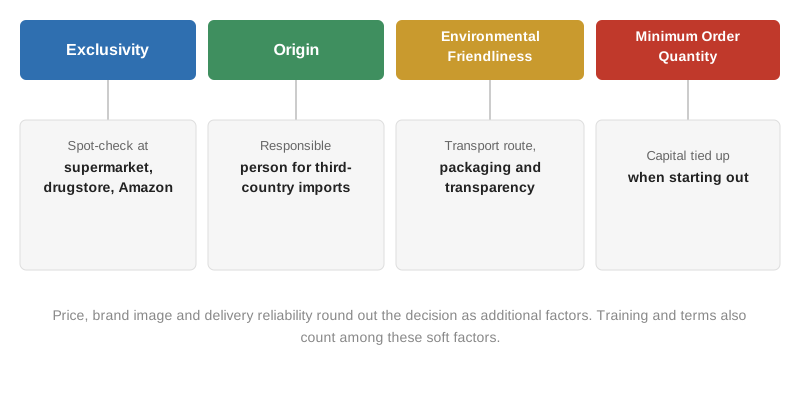
Supplier Selection for Hair Salons: The Key Criteria at a Glance

Price, brand image, exclusivity and delivery reliability are among the central criteria. The plain list price says little on its own, since discounts, bonuses and early-payment terms change the actual cost substantially. Fit with the target audience matters just as much, since brand image should match the desired regular clientele. Salons that focus on a few main suppliers also tend to reach volume-based bonus tiers sooner.
Salon Exclusivity: What the Term Actually Means
Manufacturers define salon exclusivity differently, which often dilutes the term. Some well-known brands also sell nearly identical products under the same name in supermarkets or drugstores. The price there is often noticeably lower. Other brands, by contrast, stay consistently out of retail and supply professional salons only. New founders therefore benefit from a critical look before a supposed unique selling point becomes part of their own positioning.
How to Verify Real Exclusivity
A simple spot check reveals a lot: does the brand turn up when searching supermarkets, drugstores or platforms like Amazon? If so, the exclusivity is usually not complete. A detailed trade article on this topic also shows concrete examples of well-known brands. A look at the supply contract itself helps too, since genuine territorial protection or sole distribution is stated there explicitly. Anyone unsure is better off comparing several independent sources rather than relying solely on marketing material.
USA, Asia or Europe: Where the Goods Actually Come From
Many seemingly European brands have individual ingredients or entire batches manufactured outside Europe. A supplier’s location therefore does not automatically say much about the actual production chain. Direct imports from a third country such as the USA or from Asia require a responsible person within the EU. That person takes on the legal liability for safety and labeling. A salon that buys goods through an established wholesaler does not itself become the responsible person. This applies as long as the brand and labeling remain unchanged.
Supplier Selection for Hair Salons: Putting Sustainability in Perspective
A European location alone does not guarantee a better environmental footprint, since raw materials often come from global suppliers regardless. Long transport routes by air freight noticeably affect the CO2 footprint. Sea freight, by contrast, has far less impact than often assumed. Packaging, formula concentration, and whether a manufacturer discloses sustainability data at all often matter more. The article Sustainability in the Salon covers what matters for resources, waste and certification in more depth.
Minimum Order Quantities and Tied-Up Capital at Start-Up
Large brand manufacturers often require high minimum order quantities that tie up fresh capital right from the start. Smaller or regional suppliers, by contrast, often come with lower entry thresholds, though with less brand recognition. Anyone planning their initial equipment should therefore match minimum order quantities against available start-up capital early on. Salons planning their initial investment more broadly will find further guidance in the previously mentioned article on salon equipment.
Training, Terms and Soft Factors
Direct manufacturer relationships often bring additional benefits: training, exchange service, personal on-site consultation and free marketing materials. Wholesalers, by contrast, usually bundle several brands and thereby offer more flexibility with smaller order quantities. Payment terms and early-payment discounts also directly affect liquidity in the first months. Comparing these soft factors early helps avoid later surprises with supply shortages or complaints.
Wholesaler or Direct Distribution from the Manufacturer?
A wholesaler bundles several brands under one contract and significantly reduces administrative effort as a result. Direct distribution from the manufacturer, by contrast, often offers better terms but frequently requires higher order volumes. A combination of both often works well in the first months after founding, balancing flexibility and cost advantages. As the salon grows, the supplier structure can then be adjusted deliberately.
Conclusion: Supplier Selection for Hair Salons as a Long-Term Decision
Supplier selection for hair salons involves far more than the pure purchase price. Exclusivity, origin, minimum order quantities and soft factors such as training all affect cost and brand image together. Anyone who carefully examines these criteria before founding makes a decision that holds up for years.
This article provides general information and does not replace individual legal, tax or financial advice.