
Liquidity planning in the hair salon often decides more about a business’s survival than plain profit does. A salon can look profitable on paper and still become unable to pay its bills. What matters is whether incoming and outgoing payments line up in time.
Liquidity also differs fundamentally from profitability, even though the two terms are often mixed up. Profitability measures whether a salon earns money over the long run. Liquidity instead measures whether enough cash is available on each due date. This article shows how salons can plan and protect their ability to pay.
Liquidity Planning in the Salon: Why Profit Is Not the Same as Solvency
Many salons price their services carefully and still show a profit on paper. Even so, some businesses run into payment trouble unexpectedly. The reason usually lies in the timing gap between expenses and income. Rent and payroll fall due every month, while client revenue fluctuates. Salons that have priced their services soundly can find more guidance in the article Pricing in the Hair Salon.
Typical Liquidity Risks in Everyday Salon Business
Seasonal swings rank among the biggest risks in the hairdressing business. Demand drops in many regions during summer, while the holiday season brings a sales peak. At the same time, fixed costs such as rent, lease payments and payroll continue regardless of client volume. Buying colour and care products also ties up cash before clients pay for the service. Larger investments in new equipment strain liquidity too, if their timing is poorly chosen.
The Liquidity Plan: Structure and Basic Formula

A liquidity plan shows how the account balance develops over a given period. The basic formula is simple: opening balance plus incoming payments minus outgoing payments equals the closing balance. This closing balance then becomes the opening balance of the next period. Importantly, a liquidity plan reflects actual cash flows, not a revenue forecast. A salon can therefore have well-calculated prices and still miss individual payment dates.
Liquidity Planning in the Salon: Using a Rolling Approach Correctly
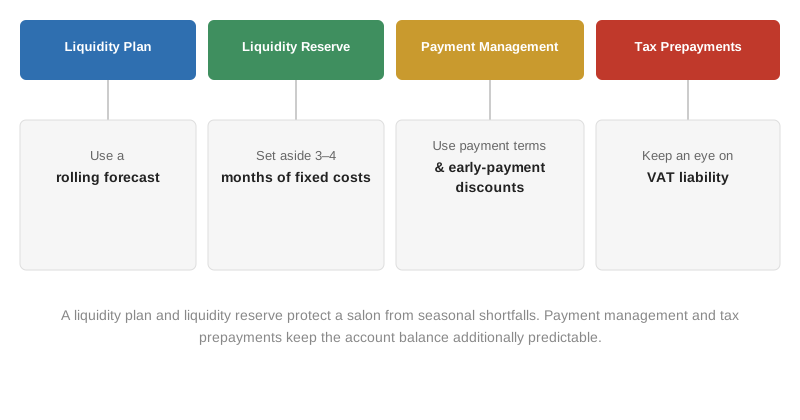
Liquidity planning in the salon works best as a rolling process rather than a one-off project. In calm periods, a monthly forecast covering the next twelve months is usually enough. If a salon enters a tighter phase instead, a closer weekly forecast over thirteen weeks is advisable. This makes it possible to spot short-term gaps early. The plan should also be checked regularly against actual account movements.
The Liquidity Reserve: How Much Buffer a Salon Needs
An adequate liquidity reserve cushions unexpected gaps reliably. As a rule of thumb, a salon should hold back three to four months of fixed costs in reserve. Less than two months is generally considered far too tight. Especially during the founding phase, a subsidised loan also serves as a useful liquidity buffer. On its funding page for founders, KfW also states that founders need their own liquidity plan.
Spotting Warning Signs of a Liquidity Squeeze Early
Certain signs point early to an approaching liquidity squeeze. If unpaid client invoices start piling up, the risk grows noticeably. Regularly maxing out an overdraft line is likewise a clear warning sign. It is just as concerning when fixed costs can barely be covered anymore. Salons should therefore monitor these indicators monthly, instead of reacting only once a real squeeze hits.
Actively Managing Payment Terms, Discounts and Reminders
A consistent reminder process noticeably shortens how long clients take to pay. For larger services such as bridal styling or extensive colour changes, a deposit is also worth requesting. Taking early-payment discounts from suppliers almost always pays off, even if it requires a short-term loan. For example, using a two percent discount by paying in ten days instead of thirty delivers a strong return. An overdraft line also serves as a flexible buffer for short-term gaps.
Tax Prepayments as an Underestimated Liquidity Factor
The monthly VAT liability strains many salons’ liquidity more than most expect. A permanent filing extension shifts the filing and payment deadline back by one further month. In return, a one-off special prepayment becomes due under monthly filing, which is later offset. Full details on tax types and deadlines are available in the article Taxes in the Hair Salon. Knowing these deadlines helps salons plan their liquidity more realistically from the start.
Liquidity Planning in the Salon: From Squeeze to Solid Reserve
Liquidity planning in the salon can improve noticeably with just a few consistently applied tools. A rolling plan, an adequate reserve and active payment management all work together. Combining these three building blocks makes seasonal swings noticeably easier to withstand. Tax deadlines belong in the plan just as much as client invoices and supplier terms. Salons that want to develop their financial planning professionally can request a consultation with TerraNova at any time.
This article provides general information and does not replace individual legal, tax or financial advice.