
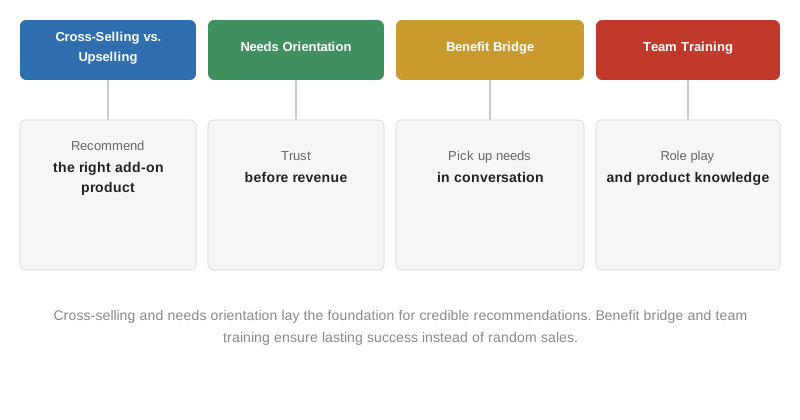
Cross-selling in the salon increases revenue per client visit without a salon needing to win new clients. It isn’t about pushy sales, but about fitting recommendations tied to the service already booked. Knowing the difference from upselling makes recommendations more targeted and more credible.
Many salons also show a surprisingly low average ticket, since product sales are often barely used. That gap represents a clear, frequently untapped source of revenue. This article shows how cross-selling in the salon can work fairly, based on genuine need.
Cross-Selling in the Salon: The Difference from Upselling
Cross-selling in the salon means recommending fitting extra products or services alongside the booked treatment. A care product following a colour service is a classic example. Upselling, by contrast, works differently: it moves a client toward a higher-value version of the same service. A premium colour service instead of a standard one counts as upselling, not cross-selling.
Why Extra Sales Are Economically Underrated
In the average hairdressing ticket, only a small share typically comes from product sales. Most of the revenue still comes almost entirely from the service itself. The article Key Metrics in the Hair Salon explains this figure further, covering average revenue per client visit. Even a moderate rise in product sales therefore has a noticeable effect on total revenue.
Fitting Extra Sales: Care Products and Add-on Services

Care products that fit the specific treatment tend to sell the most credibly. Shampoo and conditioner after a colour service directly protect the result just achieved. Add-on services such as a scalp massage, root treatment or gloss also fit easily into an existing appointment. Offers that sit too far from hair and skin, by contrast, sell noticeably worse.
Cross-Selling in the Salon: Needs-Based Advice Instead of Pushy Sales
Cross-selling in the salon only works when trust clearly comes before short-term revenue. Open questions about current hair care open the conversation more naturally than a straight product pitch. Anyone who honestly assesses hair condition first ends up recommending more credibly afterward. The article Consultation in the Hair Salon describes how such a conversation is generally structured.
Timing and the Benefit Bridge: When a Recommendation Lands
The right moment for a recommendation usually comes right after a successful treatment. A benefit bridge links the extra offer directly to a need mentioned during the conversation. If a client declines, the team should accept that decision without pushing further. The Vertriebsakademie covers detailed timing and conversation techniques in its own guide.
Training the Team: Building Sales Skills in Hairdressing
Sales skills often get too little attention in traditional training and remain largely learned on the job. Role-play within the team helps practise typical conversations without any real risk. Solid product knowledge matters just as much, since only genuine understanding leads to a credible recommendation. Short, regular refreshers tend to work better than one long training session.
Performance-Based Pay as an Incentive
Many salons also rely on performance-based pay once certain revenue thresholds are reached. Such extra pay motivates staff without fundamentally changing the advisory approach. It remains important, however, that the pay never crowds out the advisory mindset. Otherwise trust quickly declines, and repeat business declines along with it.
Avoiding Common Mistakes with Extra Sales
An overly pushy sales tone puts clients off quickly. A lack of product knowledge feels especially unconvincing the moment specific questions come up. Recommendations without a genuine link to actual hair or skin condition also come across as arbitrary. Unrelated extra offers, such as travel or jewellery, ultimately don’t fit the core business.
Cross-Selling in the Salon: From Chance Sales to a Steady Routine
Cross-selling in the salon works best once needs-based advice, timing and team training come together. Trust remains the most important requirement for every successful extra sale. Getting these basics right raises revenue per client noticeably and lastingly. Salons that want to develop their advisory and sales approach professionally can request a consultation with TerraNova at any time.
This article provides general information and does not replace individual legal, tax or financial advice.