
Hair extensions in the salon count among the most demanding services in the hairdressing trade. The choice of method decides how natural the result looks and how well the client’s own hair tolerates the treatment. Knowing tape-in, bonding, weft and ring systems leads to safer advice and avoids complaints later.
This article compares the common methods and shows how salons should classify real and synthetic hair. It builds on the article Hair Structure in the Salon, which covers porosity and pH value.
Hair Extensions in the Salon: The Main Methods at a Glance
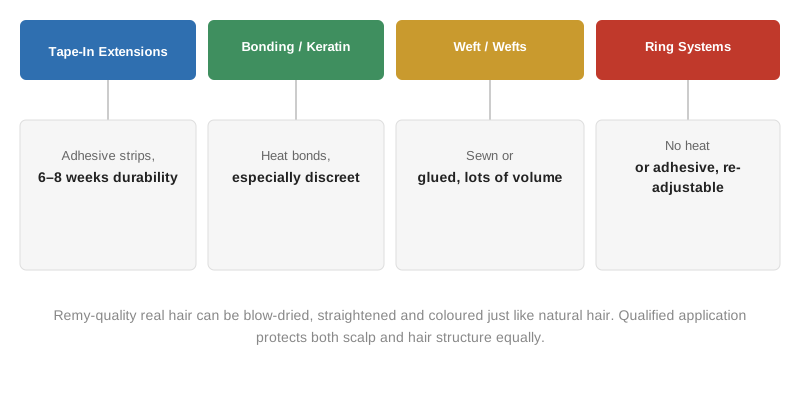
Salons today use four main methods: tape-in, bonding, weft and ring systems. Each method attaches the extra hair differently and puts different strain on the scalp and hair structure. Wear time, maintenance effort and cost also differ noticeably between the methods. The right choice therefore depends heavily on hair condition and client expectations.
Tape-In Extensions: Fast Application with Adhesive Strips
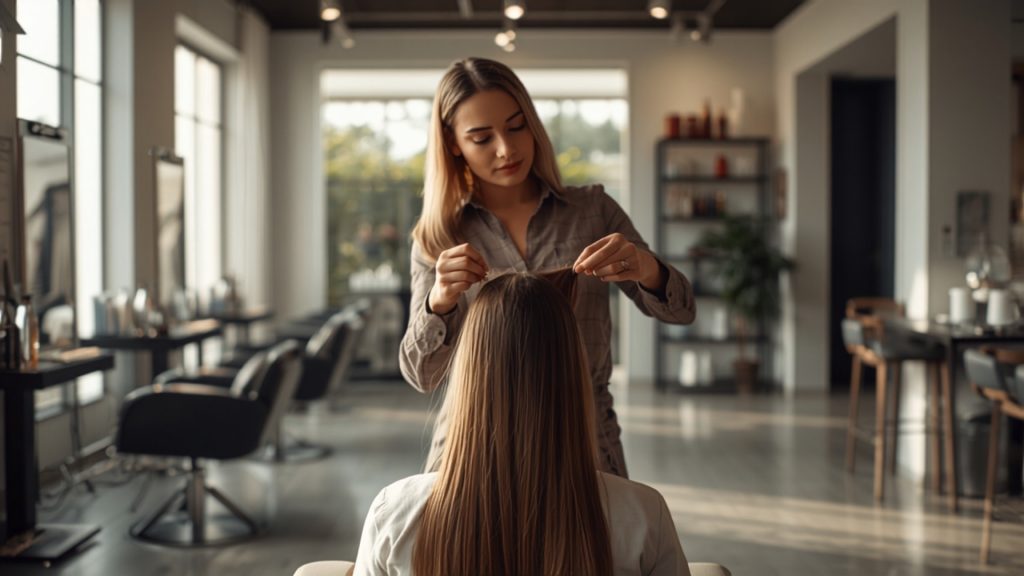
Tape-in extensions consist of narrow hair strips with an adhesive tape at the root. Two strips sandwich a thin strand of the client’s own hair from above and below. Application usually takes only one to two hours and barely stresses the hair. After roughly six to eight weeks, the tape needs reapplying because the hair has grown out.
Bonding and Keratin Extensions: Individual Strands Fixed with Heat
With bonding or keratin extensions, a keratin pad fuses individual strands firmly to the client’s own hair. A special heating tool briefly warms the keratin, which shapes and hardens it. This method looks especially discreet, since individual bonds barely stand out. The heat stresses the hair more than other methods, so trained application matters even more.
Weft and Weave Extensions: Sewn or Glued for More Volume
Weft extensions consist of narrow hair wefts attached to a fabric band. Salons either sew the wefts into a cornrow braid or glue them flat to the root. This method suits visible volume across a larger area particularly well. Because the wefts sit across a wide area, the weight distributes more evenly across the scalp.
Micro-Ring and Nano-Ring Extensions: No Heat or Glue Needed
Micro-ring and nano-ring extensions fix individual strands with small metal or silicone rings. A special pincer presses the ring firmly around the client’s own hair and the added strand. Since neither heat nor glue is needed, this method counts as especially gentle. For nickel allergies, a ring made from nickel-free material is strongly recommended.
Hair Extensions in the Salon: Choosing Real or Synthetic Hair
Real hair, often sold as Remy quality, can be blow-dried, straightened and coloured like the client’s own hair. In Remy real hair, all cuticle layers run in the same direction, so the hair tangles less. Synthetic hair costs noticeably less but tolerates almost no heat and often looks less natural on close inspection. For visible areas such as the crown, investing in real hair usually pays off.
Checking Tolerance and Allergy Risks Before Treatment
A short conversation about allergies and scalp sensitivity is worth having before any treatment. Adhesive residue from tape-in and bonding can trigger redness or itching on sensitive skin. Metal rings sometimes contain nickel, which can trigger contact allergies in those already sensitised. The article Hair Structure in the Salon further explains how porosity and pH value affect a treatment’s tolerance.
Care, Longevity and Refreshing in Everyday Salon Work
Extensions need sulphate-free shampoo and regular combing with a soft brush, starting from the ends. Roots such as tape-in and bonding should be refreshed at the salon every six to ten weeks. Ring systems, by contrast, can often be readjusted without removing the rings completely. The article Salon Consultation shows how to clarify realistic maintenance effort before the appointment.
Conclusion: Recommending Hair Extensions in the Salon Safely
Hair extensions in the salon differ clearly in attachment, longevity and maintenance effort. No method automatically suits every hair type or scalp. Openly addressing tolerance, hair quality and everyday practicality leads to safer advice and builds lasting trust. Qualified training remains the foundation of every professional application, as the Zentralverband des Deutschen Friseurhandwerks also emphasises. Salons that want to structure their processes professionally can request a consultation with TerraNova at any time.
This article provides general information and does not replace individual legal, tax or financial advice.