
Balayage, foil highlights and ombré confuse many clients during a consultation at the salon. All three techniques lighten hair, yet they differ clearly in application, result and maintenance effort. Knowing these differences leads to safer advice and helps find the right choice together with the client.
This article compares the three techniques in detail and shows which one suits which hair type. It builds on the article Hair Colour Theory in the Salon, which covers the colour wheel and pigments.
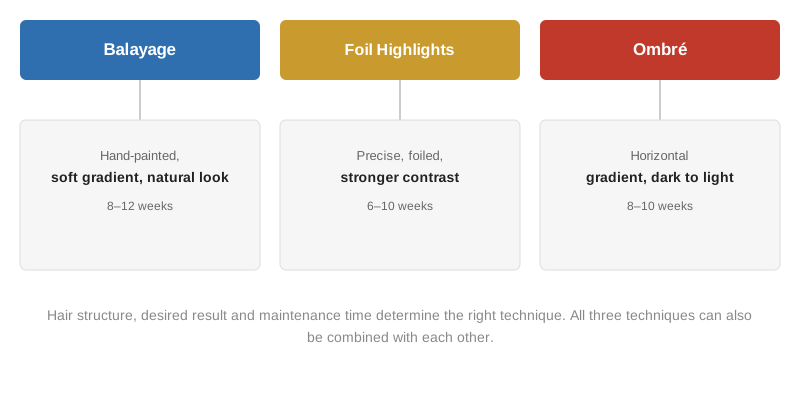
Balayage, foil highlights and ombré: the three techniques at a glance
Balayage refers to freehand painting of colour with a brush, usually without foil. Foil highlights, by contrast, section off individual strands precisely and wrap them in aluminium foil. Ombré differs fundamentally, since the colour runs horizontally here, from dark roots to light ends. All three techniques can also be combined, for instance ombré with additional balayage accents.
Balayage: a freehand technique for a natural result
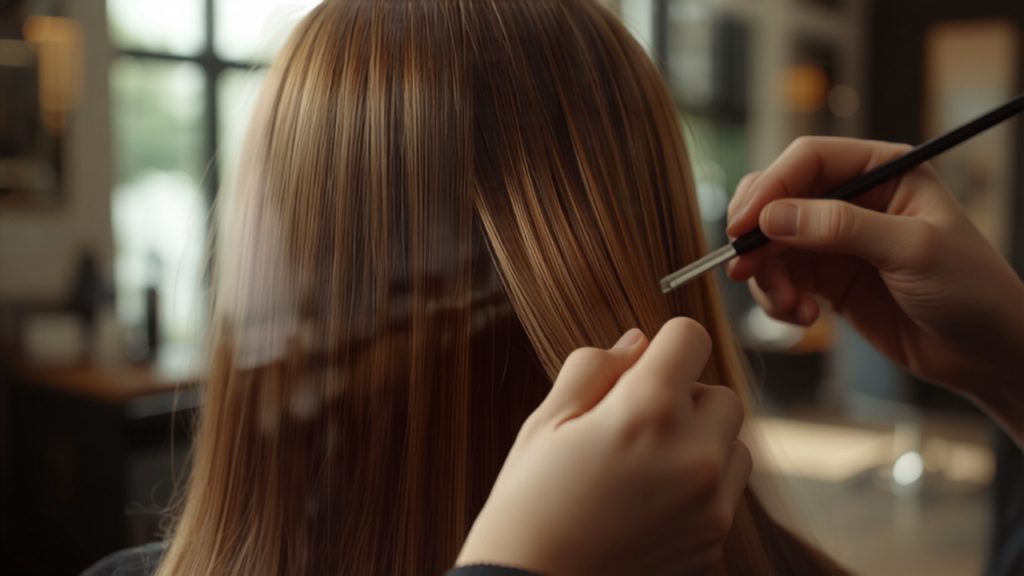
With balayage, the colourist applies colour directly with a brush to individual strands. The transitions look soft, like naturally sun-lightened hair. Since no sharp regrowth line forms, the colour grows out inconspicuously. Balayage therefore suits longer hair particularly well, where the gradient shows to full effect. The Wikipedia article on balayage explains more about the technique’s origin and effect.
Foil highlights: precision and stronger contrast
Foil highlights section off individual strands and wrap each one separately in foil. The foil generates heat, which speeds up and intensifies the lightening. The result comes out higher-contrast than balayage, with more clearly visible light and dark areas. This technique suits clients who want a bolder, more defined look.
Ombré: the deliberate gradient from dark to light
Ombré deliberately splits the hair into two zones: darker roots and noticeably lighter lengths. The transition can run soft or be set deliberately sharp. Unlike balayage, the root area usually stays completely untreated. Ombré therefore suits clients who want a striking contrast but little maintenance effort at the root.
Balayage, foil highlights and ombré: which technique suits which hair
Fine hair tolerates foil highlights better, since the lightening happens in a more targeted and controlled way. Thicker, textured hair, by contrast, shows off balayage gradients particularly well. Short haircuts suit foil highlights better, since balayage and ombré often lack the length for their full effect. Naturally blonde or already light hair combines well with all three techniques.
Maintenance effort and touch-up intervals compared
Balayage typically lasts eight to twelve weeks before a touch-up is needed. Foil highlights, by contrast, need refreshing more often, roughly every six to ten weeks, since the regrowth is more visible. Ombré falls in between at eight to ten weeks but often needs additional toning every three to four weeks. Purple shampoo and heat protection noticeably extend the lifespan of all three techniques.
Consultation before booking the appointment
A thorough consultation before the appointment prevents disappointment over result and maintenance effort. The article Client Consultation in the Salon shows how to capture needs and expectations in a structured way. Social media photos often serve as a first reference point but don’t replace an in-person professional assessment. Checking hair structure and prior colour history closely avoids complaints later.
Hair condition and tolerance: what to check beforehand
Pre-damaged or heavily chemically treated hair often tolerates intensive lightening less well. A strand test beforehand shows how the hair reacts to the planned technique. The article Hair Colour Theory in the Salon explains further how the colour wheel and residual pigment affect the result. When in doubt, it also helps to check the manufacturer’s instructions for the products used.
Conclusion: recommending balayage, foil highlights and ombré correctly
Balayage, foil highlights and ombré differ clearly in technique, result and maintenance effort. None of the three methods is inherently the best; hair structure, desired result and available maintenance time remain decisive. Addressing these criteria openly during consultation helps find the right technique together with the client.
This article provides general information and does not replace individual legal, tax or financial advice.