
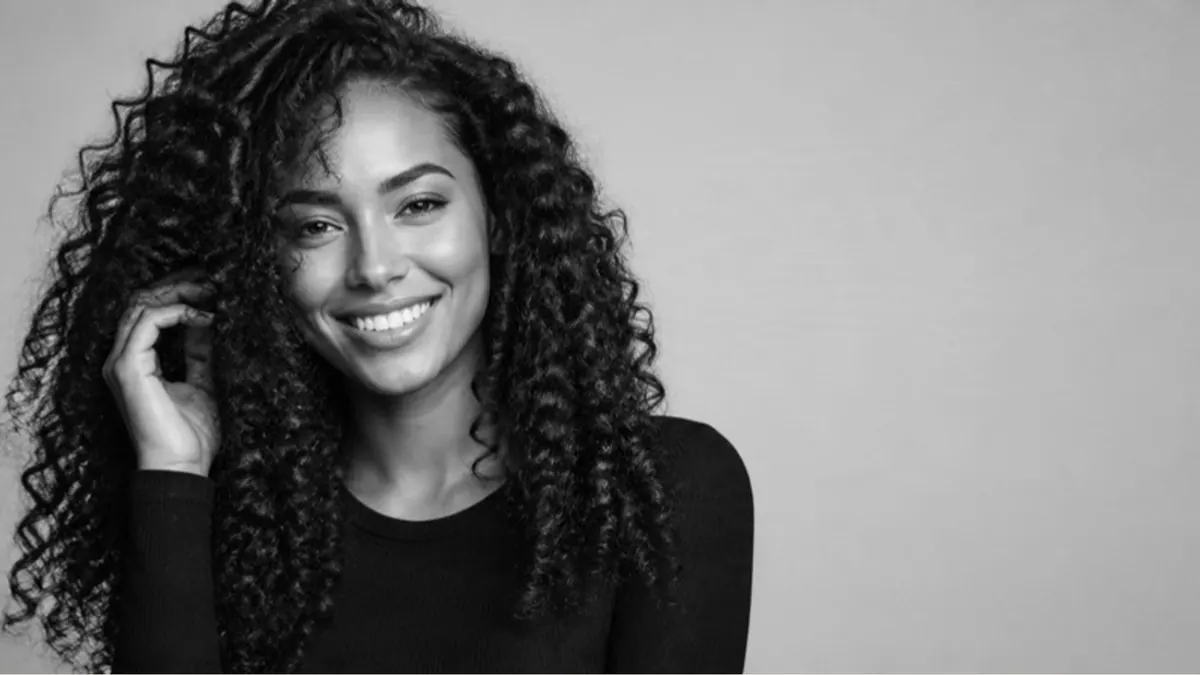
Curly hair in the salon needs more than a good haircut. If you recognise the curl type, match the care to the hair and cut it dry, you get results that also hold up at home. Many clients with curls have also had bad experiences before, so they often come to the salon with mixed feelings.
This article explains how curls form and how to recognise curl types 2A to 4C. It also shows how to choose care and products, how the cutting consultation works and how to cut curls.
What Causes Curls: Hair Follicles and Cells Inside the Hair
Whether hair grows straight, wavy or curly is already decided at the root. In curly hair, the hair follicle is usually curved, while in straight hair it runs straight. For a long time, the shape of the follicle was therefore seen as the only cause. More recent research, however, points mainly to the inside of the hair.
The cortex, the main body of the hair fibre, contains different types of cells. In curved hair, they are spread unevenly, so the outer side of the bend differs from the inner side. A study on the curly hair of Japanese women found exactly this difference. According to a review in the Journal of Cosmetic Science, the curved follicle may therefore be a result of the curl rather than its cause.
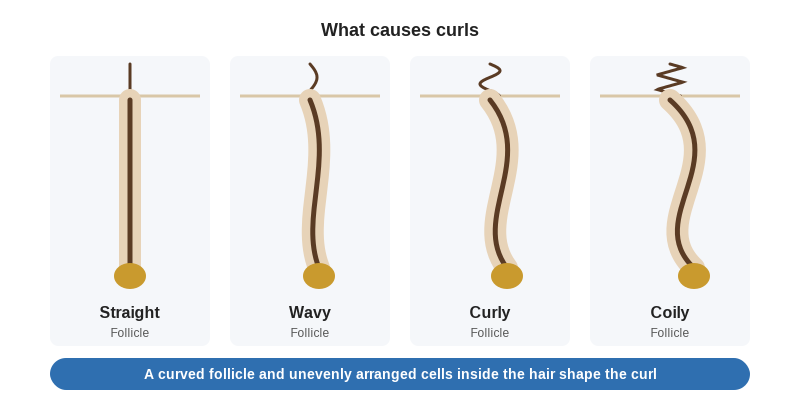
In practice, this means the curl shape is innate and care cannot change it fundamentally. Care, cutting and styling do, however, make an existing curl much more visible.
Curl Types 2A to 4C: Classifying Curly Hair in the Salon
Salons widely use a system that the US hairdresser Andre Walker developed in the 1990s. It divides hair into four types: 1 for straight hair, 2 for waves, 3 for curls and 4 for coils. The letters A, B and C describe how loose or tight the wave or curl is within each type.
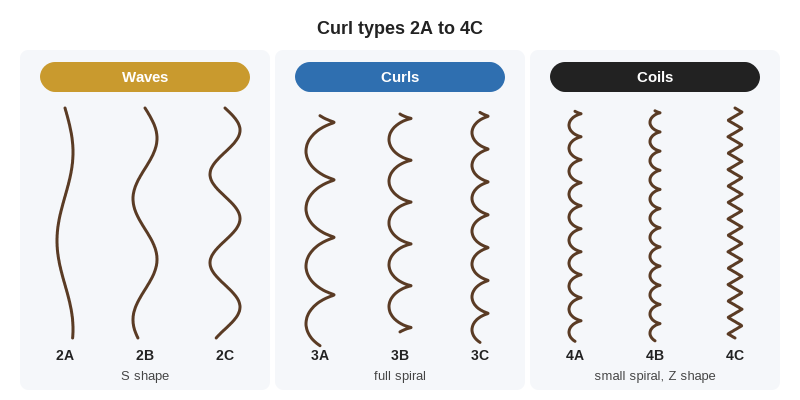
The system helps with the consultation, but it is not an exact measurement. Many people have several curl types on one head, for example tighter curls at the nape and looser waves on top. In addition, the curl type says nothing about hair density, hair thickness or porosity. That is why you should always look at these values too. The article Hair Structure in the Salon explains how to assess porosity.
Waves 2A to 2C: Typical Features

Waves form an S shape, but not a full spiral. Because the bend is wide, this type drops out more quickly under its own weight. The hair often lies flat at the root, while the waves only show in the lengths. The hair is also often rather fine.
Many clients with type 2 think their hair is straight with a slight wave. With light care, little weight and the right cut, however, the wave often becomes much stronger. Heavy products, on the other hand, quickly pull these waves straight.
Curls 3A to 3C: Typical Features

Type 3 curls form full spirals. The hair shrinks as it dries, so dry hair looks much shorter than wet hair. This type tends to frizz, especially at the root. Hair thickness usually ranges from fine to medium, and the curls bring plenty of volume.
Coils 4A to 4C: Typical Features
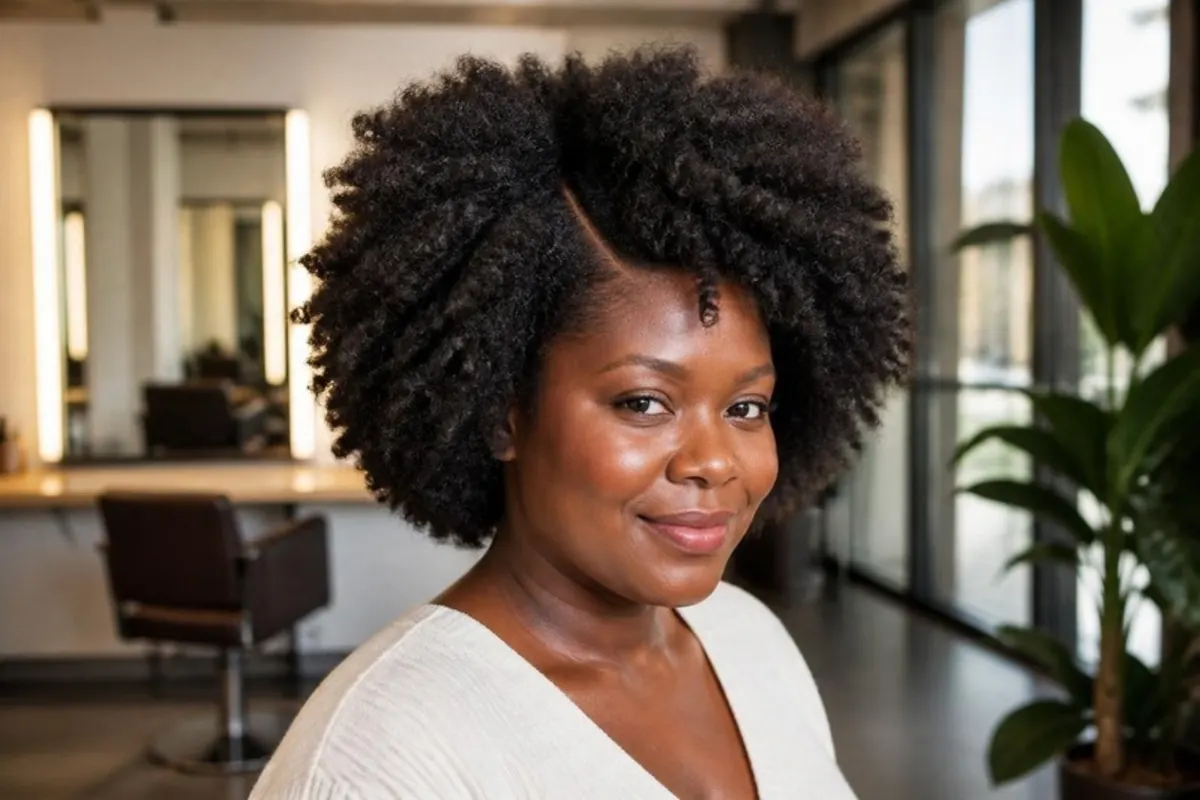
Coils form very small spirals or a Z shape with sharp bends. They have the most volume and shrink the most as they dry. The surface often looks matte and feels firmer. The hair is also more fragile at its many bends, so it breaks more easily. Research on tightly curled hair shows different and more varied fracture patterns under tension than in straight hair.
For the salon, this means every pull on the hair counts. Gentle detangling with plenty of conditioner, little heat and careful handling while cutting protect the length.
Caring for Curly Hair in the Salon: Moisture, Protein and Balance
Healthy curls need two things in the right amount: moisture for elasticity and protein for strength. Without enough moisture, hair becomes stiff, dull and frizzy. Without enough protein, it becomes soft, stretches too far and loses its bounce. Too much protein, on the other hand, makes curls hard and brittle. The goal is therefore a balance that shifts slightly with every treatment and every season.

The Wet Stretch Test in the Salon
The wet stretch test is a quick way to assess this balance. To do it, hold a single wet hair between both hands and stretch it gently.
- Stretches and springs back: the hair is in balance.
- Barely stretches: the hair is more likely to lack moisture.
- Overstretches, does not spring back or snaps: the hair is more likely to lack protein.
However, the test is a rule of thumb from practice, not a lab measurement. So test hairs from several areas of the head and compare the result with how the hair feels.
Recognising Build-up in the Hair and on the Scalp
Build-up is the residue that gradually collects on the hair and scalp. It is especially noticeable with curls, because residue weighs the curl down and stops care products from absorbing properly. Typical causes are:
- an unsuitable washing method or cleanser,
- products that are too heavy, or silicones that shampoo does not fully remove,
- hard water with a high mineral content,
- sebum, sweat, skin flakes, and dust and dirt from the environment.
For example, a study using an electron microscope (PDF) found more deposits on hair washed with hard water. However, it did not find any clear damage to the hair surface.
On the scalp, build-up often shows as itching, a damp or oily feeling, a lack of shine and limp curls. A thorough cleanse with a clarifying shampoo, followed by a lighter care routine, usually helps. If clients also report hair loss, recommend that they see a doctor, because there are many possible causes.
Products for Curly Hair: What They Should Do
Styling products for curls have four main tasks. They define the curl, protect against heat when drying with a diffuser, build volume and keep frizz under control. Which product suits depends on the curl type, the hair thickness and the result of the wet stretch test.
Fine waves usually only tolerate light mousses or sprays. Dense coils, by contrast, need richer creams and more moisture. So explain to clients why you choose a certain type of product instead of just naming a brand. That way, they can follow the routine at home. The article Cross-Selling in the Salon shows how such recommendations also benefit the salon.
Consulting on Curly Hair in the Salon: Key Questions
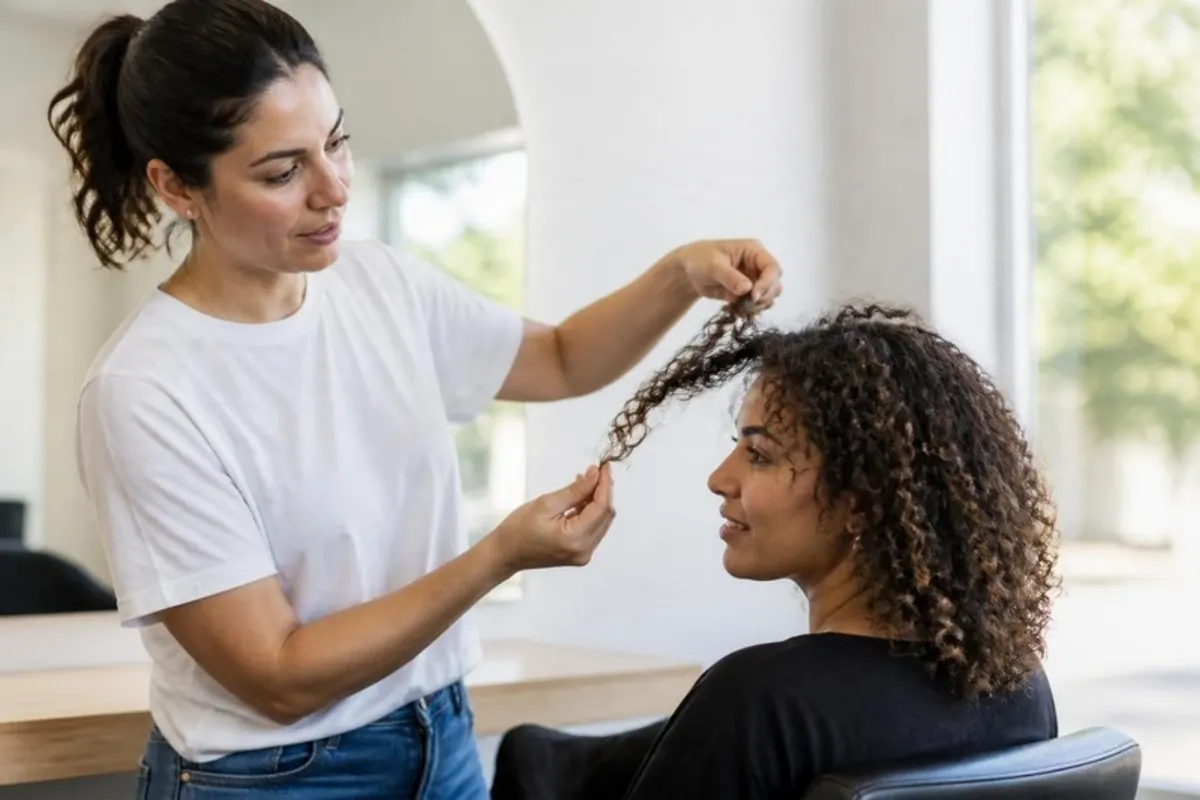
The consultation takes place on dry, unstyled hair, the way the curls fall in everyday life. Only then can you see the real bounce and the different curl types on the head. These questions have proven useful:
- What length would you like once the hair is dry?
- What shape should the style have, for example round, long or layered?
- When was your last cut?
- How do you style your curls day to day?
- What do you definitely not want?
At the end, sum up the result briefly and ask the client to confirm it. The article Salon Consultation describes how a consultation is structured in general.
Cutting Curly Hair in the Salon: Tips for the Dry Cut
Curls change their length and shape as they dry. That is why different rules apply when cutting them than when cutting straight hair:
- Cut dry: on dry hair, you can see how the curl really falls and so avoid surprises.
- Work with the natural pattern: cut curl by curl and follow the shape the hair gives you.
- Allow for bounce: leave the hair a little longer, because curls often spring up noticeably after the cut.
- No thinning or texturising scissors: they break up the curls and cause frizz.
- Personalise at the end: once the hair is dry, refine the details and adapt the shape to the face and daily routine.
Curly Hairstyles: Layers for Long, Short and Coily Hair
Layers are the most important tool for curls. Without layers, the volume builds up at the bottom and the style quickly looks like a triangle. Well-placed layers, on the other hand, spread the volume and give the curls room.
Layers for Long Hair
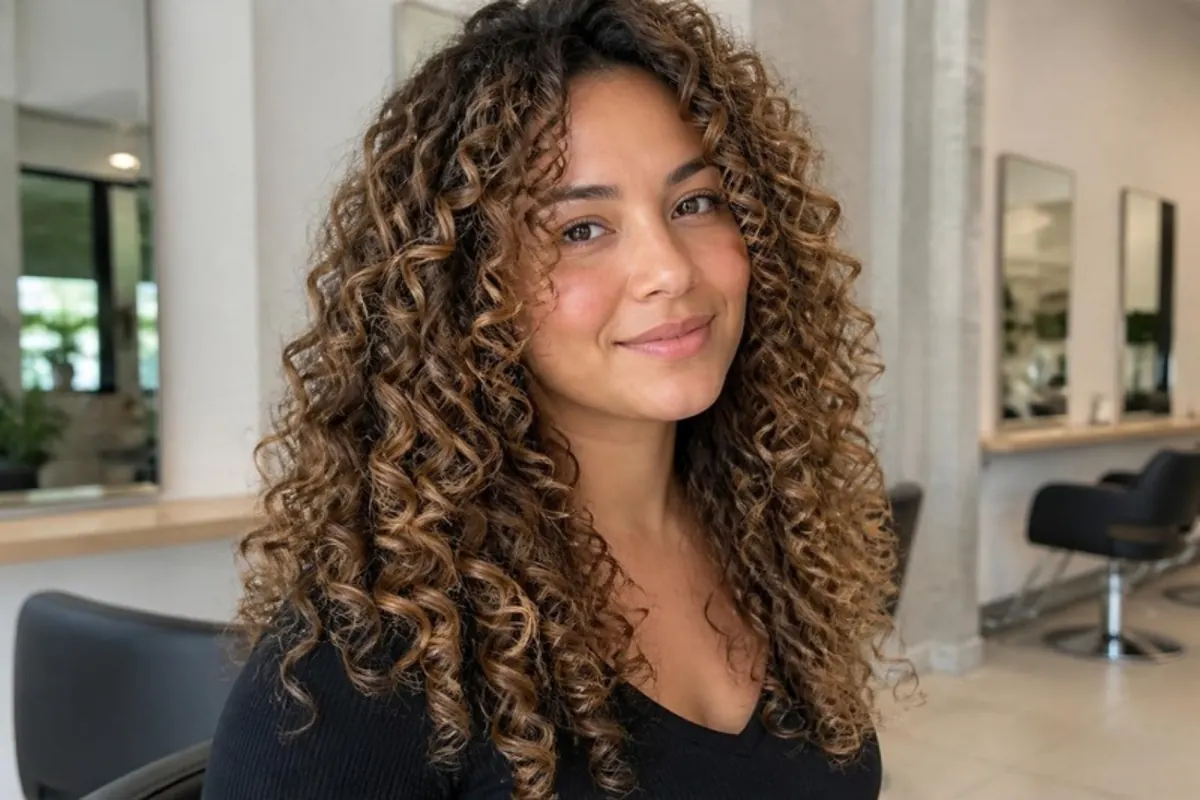
On long hair, long layers add movement and take weight out of the lengths. As a result, the curls on top gain more bounce without losing length.
Layers for Short Hair
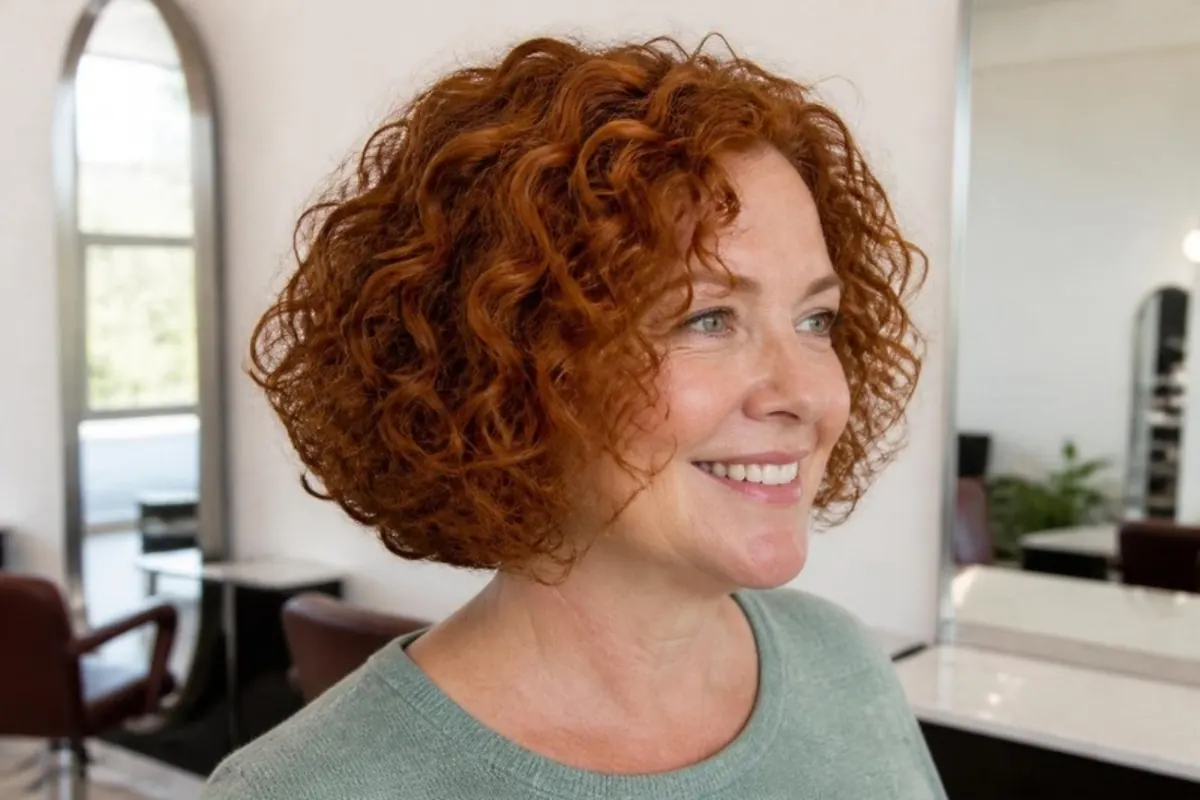
On short hair, layers create a round, soft silhouette. This makes a short curly bob look full but not wide. Bounce matters especially here, because a few centimetres change the result a lot.
Layers for Coily Hair
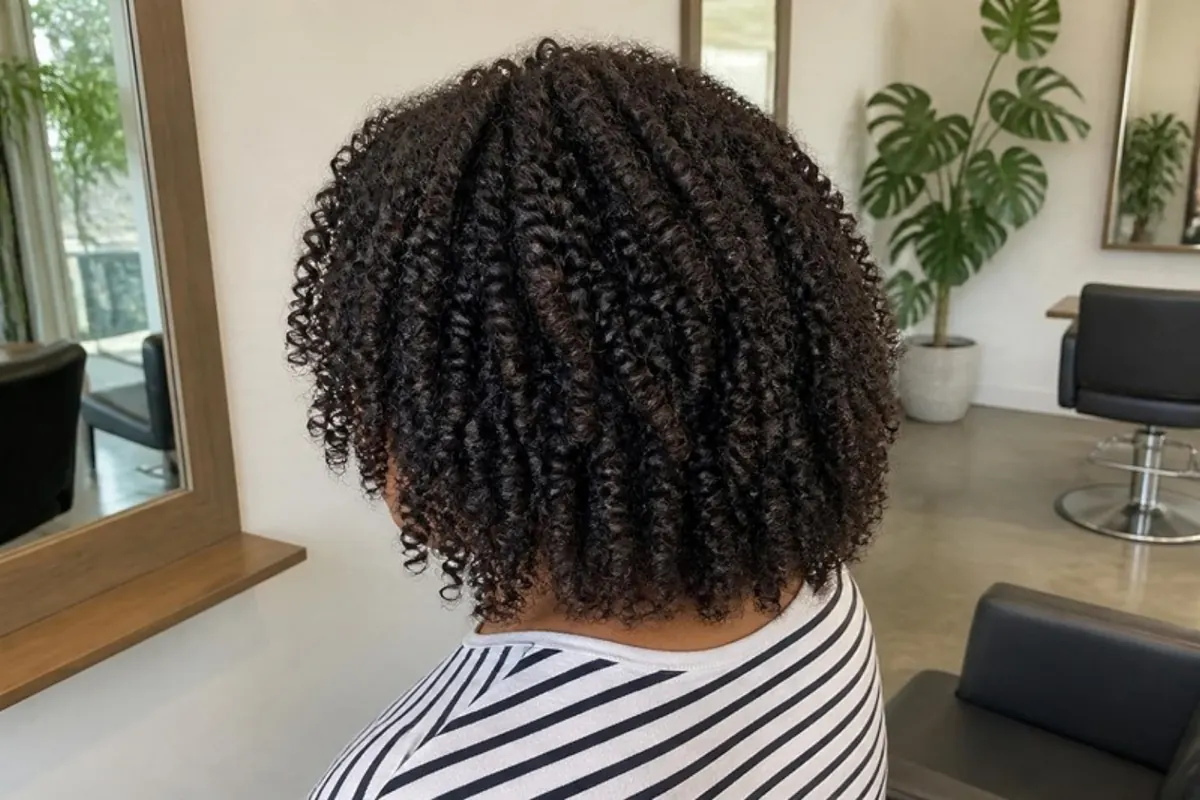
With coils, layers create an even, round shape. Cut especially carefully and in small steps here, because coils shrink the most as they dry.
Curly Hair in the Salon: How the Appointment Runs
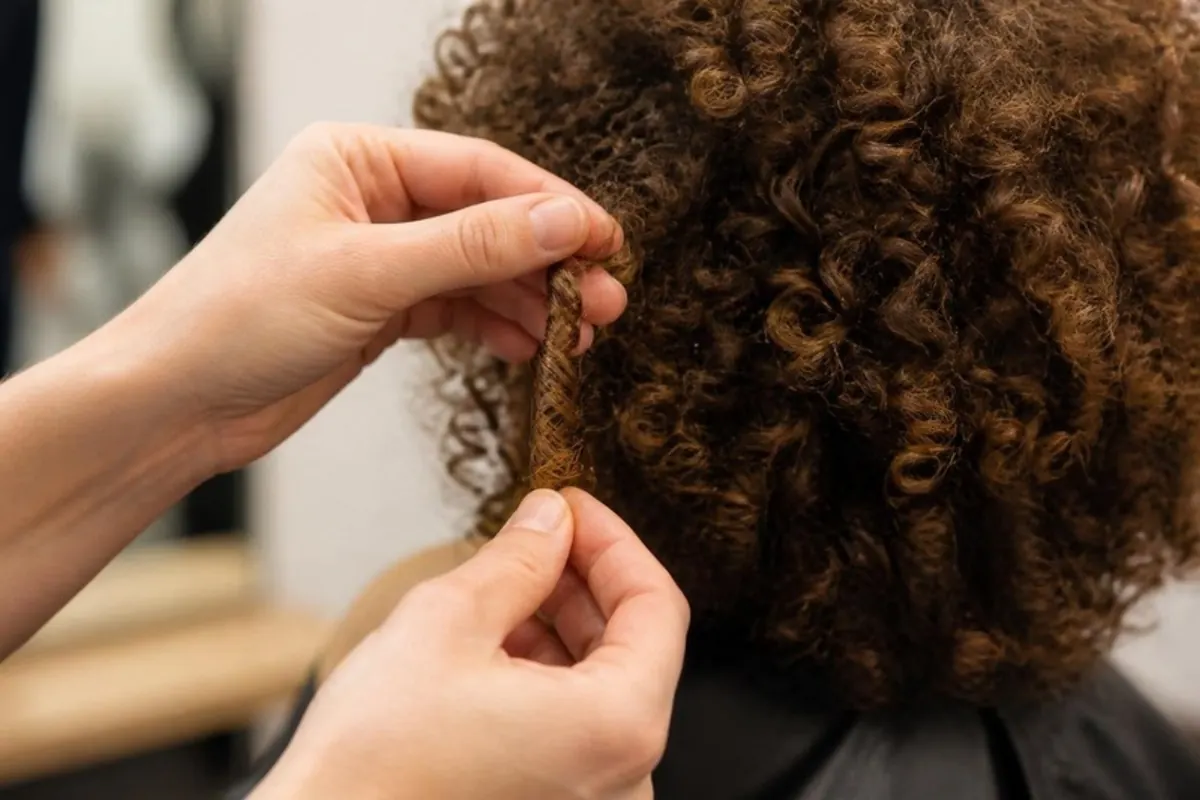
A clear routine gives clients confidence and makes the appointment easy to plan. This order has proven its worth:
- Consultation on dry hair
- Dry cut
- Wet stretch test
- Wash, condition and detangle
- Rinse thoroughly
- Work in styling products
- Remove excess moisture with a microfibre towel
- Dry the hair with a diffuser
- Final check cut on dry hair
Allow enough time for this routine, because drying and the check cut take longer with curls. You can work out the right price for the longer service with the price calculator.
Common Mistakes with Curly Hair in the Salon
- Cutting curls wet and underestimating their bounce.
- Thinning curls with thinning scissors.
- Treating every section the same, even though the curl type changes across the head.
- Weighing down fine waves with products that are too heavy.
- Missing build-up and applying even more conditioner.
Conclusion: Advising on and Cutting Curly Hair in the Salon with Confidence
Curly hair in the salon works when curl type, care and cut fit together. The curl type sets the direction, the wet stretch test shows the care needs, and the dry cut creates the shape. A clear routine also makes the appointment easy to plan for clients and the team. Salons that want to expand their services for curly hair can request a collaboration with TerraNova at any time.
This article provides general information and does not replace individual legal, tax or financial advice.